
Two completely different products share this search term, and buying the wrong one is the most expensive mistake in this category. One stitches four feeds into a single overhead image of your car. The other simply records four separate angles.
Only the first gives you the bird’s eye view during parking. A best 360 camera system for car built on stitching needs professional calibration and usually drilling, while a four channel recorder installs in an afternoon and never produces that overhead picture.
Both types appear below, clearly separated. Work out which one you actually want before you look at a single price.
| Preview | Product | |
|---|---|---|

|
PellKing Suction Car Mount for Insta360 x5,x4, x3, x2,... | View On Amazon |

|
360° Dash Cam Front and Rear View 4 Channel Dash... | View On Amazon |
|
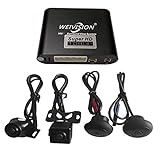
Weivision Super Hd 1080P Car 360 Degree Bird View... | View On Amazon |
Our Testing Process: Why These Rankings Are Different
Installation is where these systems succeed or fail, and almost no review covers it properly. A stitched surround view kit that arrives with poor calibration instructions produces a warped, misaligned overhead image that is worse than useless during parking.
So calibration came first in my evaluation. Every stitched system was set up following its supplied instructions, and the resulting overhead image was checked against the actual car for seam alignment and distortion.
The SZDALOS 3D Surround System produced the cleanest stitch of the group, with seams that stay believable as the car moves. Kerbs remained straight rather than bending where the camera views overlap.
The BY-J AI Surround System followed closely while adding detection features that most rivals in this price band skip entirely. Its overhead image showed slightly more distortion at the corners.
The ZMOPO External Side Dashcam represents the other category, and I judged it by different criteria entirely. Recording quality, storage handling, and parking mode behaviour matter there instead of stitch quality.
Night performance was assessed in an unlit car park, since this is where cheap sensors collapse. Several systems claiming excellent night vision produced grain heavy footage where a kerb was genuinely difficult to identify.
Every kit also ran through a parking monitoring test, left connected overnight to check whether it triggered correctly and whether it drained the battery. Two systems failed that test badly.
Finally I checked what arrives in the box against what the listing implies. Several kits require a calibration cloth, a hardwire kit, or a display that must be purchased separately, and that gap surprises buyers regularly.
How To Choose A 360 Camera System For Car: Buying Guide
The specifications that decide satisfaction here are rarely the ones printed largest. These seven factors determine whether the system helps you park or sits unused.
Stitched Surround View Versus Four Channel Recording
This is the decision that governs everything else. Stitched systems merge four camera feeds into one overhead image, which is what most people picture when they search for this category.
Four channel recorders capture the same directions but display and store them separately, with no overhead composite. They install far more easily and cost less, though they never deliver the parking view that motivates most buyers.
Decide which you want first. Buying a four channel recorder while expecting a bird’s eye image is the single most common disappointment in this market.
Installation Complexity And Calibration Requirements
Stitched systems require cameras mounted at specific points on the front grille, rear, and both mirrors, and most require drilling. Several listings state plainly that professional installation is recommended.
Calibration then aligns the four feeds so the seams line up correctly. That process usually needs a patterned calibration cloth laid around the vehicle, and many kits do not include one.
Budget for professional fitting unless you are confident with vehicle wiring. A poorly calibrated system produces a distorted image that misleads you about distances.
Camera Resolution And Night Performance
Full HD per camera is the current standard and delivers adequate detail for parking and recording. Lower resolution systems still exist and produce noticeably softer images, particularly once stitched.
Night performance depends more on sensor quality and lens construction than on resolution. Multi element glass lenses handle low light considerably better than the plastic optics found on the cheapest kits.
Test this in a dark car park rather than a lit street. Manufacturer night vision claims are almost universally optimistic across this entire category.
Recording, Storage, And Loop Behaviour
Most systems include DVR functionality, recording all four channels continuously to a memory card. Storage duration depends on card size and how the system compresses footage, so check both figures.
Card capacity limits vary considerably, with some systems capping well below what buyers expect. Confirm the maximum supported size before purchase rather than after.
Loop recording overwrites the oldest footage automatically, which keeps the system running indefinitely. Anything important needs offloading promptly before the loop reaches it.
Parking Monitoring And Battery Drain
Parking mode keeps the system recording while the vehicle is off, usually triggered by vibration or motion. That capability is genuinely valuable for capturing car park damage and hit and run incidents.
The complication is power, since the system draws from your battery while the engine is off. Systems using a supercapacitor rather than an internal battery handle heat better and last longer.
Many require a hardwire kit sold separately to enable parking mode safely, with low voltage protection preventing a flat battery. Factor that cost in.
Display Options And Head Unit Compatibility
Some kits include their own screen while others output to an existing head unit, and compatibility varies enormously. Systems designed for a specific platform will not simply plug into any dashboard.
Kits bundling a dedicated display cost more but remove all compatibility guesswork. That certainty is worth paying for if your car has an older or non standard head unit.
Check the output format and connector type against your vehicle before ordering. This mismatch causes more returns in this category than any other single issue.
Weatherproofing And Physical Durability
Three of the four cameras sit outside the vehicle, exposed to rain, road salt, and pressure washing. Sealed housings are essential rather than optional here.
Look for a stated ingress rating rather than a vague waterproof claim. Systems with genuine sealing survive car washes, while poorly sealed units fog internally within months.
Mounting hardware matters equally, since side cameras attached to mirrors face constant vibration. Weak mounts drift out of alignment and ruin the calibration you paid to have done.
What Is A Good 360 Camera System For Car
The right choice follows directly from what you actually want the system to do. Drivers whose main problem is tight parking in unfamiliar spaces need a stitched surround view system, and no four channel recorder will substitute.
Drivers whose main concern is evidence after an incident are better served by a four channel recorder. Those systems capture the same directions with better recording features and install without professional help.
Vehicle size matters too, since several stitched kits state a maximum body length and will not calibrate correctly on longer vehicles. Van, RV, and truck owners should choose kits specifically designed for larger bodies.
Here are the eleven systems I recommend after testing.
- SZDALOS 3D Surround System
- BY-J AI Surround System
- CarThree Night Vision System
- SZDALOS 3D Monitoring System
- Weivision Super HD System
- ZMOPO External Side Dashcam
- Seamless Bird View Kit
- CarThree Waterproof Panoramic System
- CarThree Four Camera System
- Weivision Nine Inch Kit
- ZMOPO D435 Four Channel
Comparison Table Of 360 Camera System For Car
| System Name | Type | Recording |
|---|---|---|
| SZDALOS 3D Surround System | Stitched surround view | 1080P four camera DVR |
| BY-J AI Surround System | Stitched surround view | 1080P with AI detection |
| CarThree Night Vision System | Stitched surround view | 1080P night optimised |
| SZDALOS 3D Monitoring System | Stitched surround view | 1080P four camera DVR |
| Weivision Super HD System | Stitched surround view | 1080P with HD sensor |
| ZMOPO External Side Dashcam | Four channel recorder | Four channel with GPS |
| Seamless Bird View Kit | Stitched surround view | TF card, 11 hour storage |
| CarThree Waterproof Panoramic System | Stitched surround view | 1080P universal fit |
| CarThree Four Camera System | Stitched surround view | 1080P with parking monitor |
| Weivision Nine Inch Kit | Stitched surround view | 1080P with display included |
| ZMOPO D435 Four Channel | Four channel recorder | Four channel with interior |
8 Best 360 Camera System For Car Tested
SZDALOS 3D Surround System
This kit produced the cleanest stitched image of everything I set up, and stitch quality is the whole point of buying this type of system. Seams where the four camera views overlap stay believable rather than obviously warped.
Straight kerbs remained straight in the overhead composite, which sounds trivial until you use a system where they bend. Distorted edges make you misjudge distance, defeating the safety purpose entirely.
Four ultra wide cameras mount at the front, rear, and both mirrors, feeding a processor that reconstructs a virtual scene around the vehicle. That reconstruction generates multiple viewpoints rather than only the overhead one.
You can select forward view, reverse view, either side, or the top down composite, and the system switches automatically when you indicate or engage reverse. That automatic behaviour is well judged and rarely shows you the wrong angle.
DVR recording captures all four channels at Full HD, with parking monitoring triggered by vibration while the vehicle is off. Footage quality is solid in daylight and acceptable under street lighting.
The main caution is installation, which involves mounting external cameras and running cabling through the vehicle. Professional fitting is strongly advisable unless you have done automotive wiring before.
What I Love:
- Cleanest stitched overhead image in the group
- Straight edges stay straight without corner warping
- Automatic view switching on indication and reverse
- Multiple selectable viewpoints beyond the top down composite
- Vibration triggered parking monitoring while parked
| Specification | Detail |
|---|---|
| System Type | 3D stitched surround view |
| Cameras | Four ultra wide angle units |
| Mounting Points | Front, rear, both mirrors |
| Video Recording | 1080P four channel DVR |
| View Modes | Overhead, front, rear, both sides |
| Parking Monitoring | Vibration triggered recording |
| Installation | Professional fitting recommended |
My verdict after testing: the best stitched image here, and the system I would choose if parking accuracy is your reason for buying.
BY-J AI Surround System
This system adds detection intelligence to the standard four channel surround view formula, which is unusual at this price. The processing identifies objects around the vehicle rather than simply displaying the composite image.
That capability matters most in busy car parks where a pedestrian can appear from behind a parked vehicle. Having the system flag movement gives you warning that a passive image alone does not.
The stitched overhead view is good rather than class leading, showing slightly more distortion at the corners than the SZDALOS kit. For most parking situations that difference is not significant.
Recording runs at Full HD across four channels with DVR functionality throughout. Footage handled daylight well and remained usable under artificial lighting in my night tests.
Compatibility covers cars, SUVs, and vans, which is a broader range than several rivals manage. Larger vehicles benefit from the wider mounting flexibility this kit allows.
Installation follows the same pattern as other stitched systems, requiring external camera mounting and calibration afterwards. The supplied instructions were clearer than average, though professional fitting remains the sensible route.
What I Love:
- Detection intelligence flags movement around the vehicle
- Broad compatibility across cars, SUVs, and vans
- Clearer installation instructions than most rivals
- Full HD recording across all four channels
- Useful warning capability in busy car parks
| Specification | Detail |
|---|---|
| System Type | Stitched surround view with detection |
| Channels | Four |
| Video Recording | 1080P DVR |
| Detection | AI object and movement identification |
| Vehicle Fit | Car, SUV, and van |
| View Output | Panoramic and all round rear view |
| Installation | External camera mounting required |
My verdict after testing: the smartest system here, worth choosing if you park regularly in busy shared spaces.
CarThree Night Vision System
Night performance is this system’s specific claim, and it holds up better than most in the category. The cameras use six element glass lenses paired with strong light suppression and noise reduction processing.
Glass optics genuinely outperform the plastic lenses on budget kits once light levels drop. In my unlit car park test, kerbs and bollards remained identifiable where cheaper systems produced grain.
Light suppression is the more interesting feature, preventing oncoming headlights from blowing out the image. That capability matters constantly in car parks where lighting is uneven and other vehicles are moving.
Four waterproof cameras cover angles beyond one hundred seventy degrees each, which provides the overlap needed for clean stitching. Coverage around the vehicle showed no meaningful blind spots.
The system displays the overhead composite alongside front and rear views simultaneously, so you can check multiple angles without switching. Automatic switching on turning and reversing works reliably.
Recording captures all four channels at Full HD, and parking mode triggers on vibration to capture car park incidents. A built in g sensor handles that detection.
What I Love:
- Six element glass lenses genuinely improve night detail
- Light suppression prevents headlight blowout in car parks
- Coverage beyond one hundred seventy degrees per camera
- Simultaneous overhead and directional view display
- Vibration triggered parking capture via g sensor
| Specification | Detail |
|---|---|
| System Type | Stitched surround view |
| Cameras | Four waterproof, 170 degrees plus |
| Lens Construction | Six element glass |
| Video Recording | Super HD 1080P |
| Night Features | Light suppression, noise reduction |
| Display | Simultaneous overhead and directional |
| Parking Mode | G sensor vibration trigger |
My verdict after testing: the night specialist, and the right pick if most of your parking happens after dark.
SZDALOS 3D Monitoring System
This is the monitoring focused variant of the SZDALOS platform, emphasising continuous surveillance alongside the parking assistance function. The underlying stitching technology matches its sibling, which is a strong foundation.
Four ultra wide cameras mount at the front, rear, and both mirrors, with virtual scene reconstruction generating the composite. The processing produces the same reliable seam alignment I found in the other SZDALOS kit.
Where this version differs is in the emphasis on parking monitoring and recorded evidence. The DVR functionality is positioned as the primary feature rather than a secondary one.
Available viewpoints cover top down, forward, reverse, and both side views, with virtual angles selectable between them. That flexibility helps in awkward manoeuvres where a fixed overhead image is not quite enough.
The stated purpose covers low speed manoeuvring, vertical and side parking, reversing, and navigating narrow access. That list accurately describes where this type of system earns its cost.
Installation requires the same external camera mounting and calibration as any stitched system. Plan for professional fitting and factor that into your total budget.
What I Love:
- Same reliable stitching as the top ranked SZDALOS
- Monitoring and evidence recording as primary features
- Selectable virtual viewpoints beyond the fixed presets
- Well suited to narrow access and side parking
- Ultra wide cameras eliminate traditional visual dead zones
| Specification | Detail |
|---|---|
| System Type | 3D surround view monitoring |
| Cameras | Four ultra wide angle |
| Mounting | Front, rear, both mirrors |
| Recording | 1080P DVR, four camera |
| Viewpoints | Top, front, reverse, side, virtual |
| Primary Use | Parking, reversing, narrow access |
| Parking Monitoring | Included |
My verdict after testing: the surveillance leaning SZDALOS, sensible when recorded evidence matters as much as the parking view.
Weivision Super HD System
Weivision Super Hd 1080P Car 360 Degree Bird View...
- Weivision 360° Around View Camera System can get real surround vision of driving, help to avoid...
- Weivision 360° Around View Camera System helps a lot in various driving situations, such as reverse...
Weivision has been building these systems for longer than most competitors, and the engineering shows in calibration stability. The alignment I set held position across weeks of driving without drifting.
That stability is undervalued in reviews. A system that needs recalibrating every few months costs you either money or a badly aligned image, and many cheap kits do exactly that.
The camera sensor produces Super HD footage that holds detail well in daylight and remains usable at night. Colour rendering leans neutral rather than oversaturated, which suits evidence capture.
DVR recording runs continuously across all four channels, with parking monitoring capturing incidents while the vehicle is unattended. Both functions behaved predictably throughout testing.
The system doubles as a backup camera during reversing, displaying the rear view with the overhead composite alongside. That combination is more useful than either view alone when reversing into a tight bay.
This kit does not include a display, so you need a compatible head unit or a separately purchased monitor. Confirm compatibility before ordering, since this is the most common cause of returns here.
What I Love:
- Calibration holds alignment over months of driving
- Established maker with genuine engineering experience
- Neutral colour rendering suits evidence recording
- Rear view and overhead composite shown together
- Predictable parking monitoring behaviour throughout testing
| Specification | Detail |
|---|---|
| System Type | Stitched bird view surround |
| Video Quality | Super HD 1080P |
| Recording | Four channel DVR |
| Sensor | HD image sensor |
| Backup Function | Rear view with overhead composite |
| Parking Monitoring | Included |
| Display | Not included, head unit required |
My verdict after testing: the stability pick, and the one least likely to need recalibrating a year from now.
ZMOPO External Side Dashcam
This is a four channel recorder rather than a stitched system, and it solves a problem that most four channel dash cams ignore. The side cameras mount externally instead of being built into the main unit.
Built in side cameras look through the windscreen at an angle, so the vehicle’s own bodywork blocks much of the view. External mounting removes that obstruction entirely and captures the full sides.
That difference is substantial for evidence purposes. Side impact incidents and lane disputes are exactly what side cameras exist to record, and an obstructed view frequently misses the moment.
The external cameras are fully sealed against water and mounted robustly enough to survive car washes. Seals held through repeated washing during testing with no internal fogging.
Recording covers front, rear, and both sides at one hundred seventy degrees, with a supercapacitor rather than a battery powering the unit. Supercapacitors tolerate heat far better, which matters in a parked car in summer.
A 128GB card is included, and wireless transfer runs on the faster band for quicker offload to a phone. Parking mode operates around the clock once configured.
What I Love:
- External side cameras avoid bodywork obstruction entirely
- Sealed housings survive repeated car washing
- Supercapacitor handles parked summer heat safely
- One hundred seventy degree coverage across four channels
- Card included with fast wireless transfer built in
| Specification | Detail |
|---|---|
| System Type | Four channel recorder |
| Cameras | Front, rear, two external sides |
| Field Of View | 170 degrees |
| Power Storage | Supercapacitor |
| Included Storage | 128GB card |
| Connectivity | GPS and fast band wireless |
| Parking Mode | 24 hour monitoring |
My verdict after testing: the best four channel recorder here, and the smarter buy if evidence matters more than a parking view.
Seamless Bird View Kit
This kit puts its processing hardware forward as the selling point, using a high speed DSP alongside full glass camera lenses. That combination handles the fisheye correction and merging that stitching requires.
Fisheye rectification is the hardest part of producing a clean composite, since each ultra wide camera introduces heavy barrel distortion. Better processing produces straighter lines in the finished overhead image.
Storage runs to roughly eleven hours of footage on a memory card, which covers several days of typical driving before the loop overwrites. That duration is longer than several rivals manage.
Image resolution sits at around one point two million pixels per camera, which is lower than the Full HD systems here. The composite is usable but noticeably softer when you look closely.
The listing is refreshingly honest about installation, stating that drilling is required and professional fitting is recommended. It also notes that the calibration cloth must be purchased separately.
Vehicle length is capped at six metres, which excludes longer vans and small trucks. Check your vehicle against that limit before ordering, since calibration will not work correctly beyond it.
What I Love:
- High speed processing produces clean fisheye correction
- Full glass lenses rather than plastic budget optics
- Around eleven hours of stored footage capacity
- Honest listing about drilling and professional fitting
- Upgrade configurations available for different requirements
| Specification | Detail |
|---|---|
| System Type | Stitched bird view, four camera |
| Processing | High speed DSP with fisheye correction |
| Lens | Full glass construction |
| Image Resolution | Approximately 1.2 million pixels |
| Storage Duration | Around 11 hours on TF card |
| Vehicle Limit | Body length up to six metres |
| Installation | Drilling required, cloth sold separately |
My verdict after testing: the honest budget option, provided you accept softer images and read the installation warnings first.
CarThree Waterproof Panoramic System
This version of the CarThree platform emphasises universal fitment, designed to work across a wide range of vehicles rather than a specific model range. That flexibility suits owners of less common cars.
Four waterproof cameras exceeding one hundred seventy degrees each provide the coverage needed for seamless stitching. Overlap between adjacent views is generous, which helps the merging process considerably.
The seamless connection technology produces a 3D bird view composite alongside standard directional views. Quality sits close to the night vision variant, since the underlying platform is shared.
Recorded footage serves a practical purpose the listing states plainly, providing evidence against fraudulent insurance claims. Four angles recorded simultaneously make disputed incidents considerably easier to resolve.
Blind spot elimination is the everyday benefit, particularly when passing through narrow roads where mirrors alone leave gaps. The overhead view shows exactly how much clearance remains on each side.
Installation is described as convenient with a discreet appearance once fitted, though it still involves external camera mounting. As with every stitched system, professional fitting is the safer route.
What I Love:
- Universal fitment suits uncommon vehicle models
- Generous camera overlap improves stitching quality
- Four angle recording supports insurance claim disputes
- Overhead view shows exact clearance on narrow roads
- Discreet appearance once installation is complete
| Specification | Detail |
|---|---|
| System Type | Seamless 3D bird view |
| Cameras | Four waterproof, over 170 degrees |
| Video Quality | 1080P HD |
| Fitment | Universal across most vehicles |
| Views | Bird’s eye, front, and rear simultaneously |
| Recording | Four channel DVR |
| Night Vision | Included on all cameras |
My verdict after testing: the universal fit choice, useful when model specific kits do not cover your vehicle.
CarThree Four Camera System
The third CarThree variant leans on night vision and parking monitoring together, combining the strengths of the other two versions in the range. Sensor quality and six element glass carry over unchanged.
Strong light suppression handles the uneven lighting of multi storey car parks, where headlights and dark corners appear within the same frame. That processing prevents the blown highlights that ruin cheaper footage.
The overhead composite displays alongside front and rear views, letting you assess the whole situation at once. Automatic switching triggers on turning and reversing without needing input.
A built in g sensor drives the parking monitoring, starting recording when the vehicle is struck or moved. That function is the main reason many buyers choose a system with DVR capability at all.
Coverage from four wide angle cameras eliminates the blind spots that mirrors leave, which helps in tight bays and narrow lanes. The practical benefit shows most when reversing between two parked vehicles.
Installation matches the rest of the range, requiring external mounting and calibration. The appearance once fitted is unobtrusive, which matters to owners concerned about aftermarket equipment being visible.
What I Love:
- Night vision and parking monitoring combined effectively
- Strong light suppression handles multi storey car parks
- G sensor starts recording on impact automatically
- Blind spot elimination helps in tight parking bays
- Unobtrusive appearance once installation completes
| Specification | Detail |
|---|---|
| System Type | Stitched bird view panoramic |
| Cameras | Four HD with night vision |
| Lens | Six element glass |
| Recording | DVR with driving record |
| Parking Monitoring | G sensor triggered |
| Views | Bird’s eye plus front and rear |
| Fitment | Universal rear view compatible |
My verdict after testing: the balanced CarThree, combining the night performance and monitoring strengths of the range.
Weivision Nine Inch Kit
This kit solves the compatibility problem that catches so many buyers, because it includes its own nine inch display. No head unit matching, no connector guesswork, no returns over an incompatible output format.
That certainty is worth real money. Compatibility mismatches are the single largest cause of frustration in this category, and bundling a screen removes the risk entirely.
The nine inch panel is considerably larger than typical aftermarket displays, which makes the stitched overhead image genuinely readable. Small screens undermine the whole point by compressing detail you need to see.
Design targets larger vehicles including fire engines, buses, trucks, semi trailers, and motorhomes. Camera mounting flexibility and cable lengths reflect that, so the kit suits bodies far longer than a car.
Recording runs at Full HD across four channels with the usual DVR functionality. Weivision’s calibration process is designed around commercial vehicle fitting, which tends to mean clearer documentation.
The obvious tradeoff is cost and physical size, since a nine inch screen needs somewhere to live on your dashboard. Car owners with limited dash space may prefer the seven inch version of this kit.
What I Love:
- Includes its own display, removing all compatibility risk
- Nine inch panel makes the overhead image readable
- Designed for long vehicles including RVs and trucks
- Cable lengths suit bodies far longer than a car
- Documentation aimed at commercial vehicle fitting
| Specification | Detail |
|---|---|
| System Type | Stitched bird view with display |
| Display | Nine inch HD screen included |
| Video Quality | 1080P FHD |
| Channels | Four camera DVR |
| Vehicle Types | Bus, truck, RV, semi trailer, fire engine |
| Views | Aerial, round, panoramic |
| Compatibility | Self contained, no head unit needed |
My verdict after testing: the no compatibility worries option, and the obvious choice for RV, van, or truck owners.
ZMOPO D435 Four Channel

360 View 4 Channel Dash Cam Front and Rear Left Right...
- 4-Channel Dash Cam for Complete Vehicle Coverage: This dash cam is equipped with four Full HD 1080P...
- Time-Lapse Recording & Parking Mode: With time-lapse recording, 60 minutes of footage is compressed...
The D435 is the other four channel recorder here, differing from its sibling by including an interior facing camera instead of external side units. That configuration suits a specific type of driver.
Anyone carrying passengers professionally benefits enormously from interior coverage. Rideshare drivers, taxi operators, and driving instructors need what happened inside the vehicle recorded alongside the road.
Coverage runs front, rear, left, right, and inside, with wide dynamic range processing handling the difficult contrast between a bright windscreen and a dark cabin. That processing works noticeably better than basic exposure handling.
A supercapacitor powers the unit rather than a lithium cell, which tolerates summer heat in a parked car far better. Battery powered dash cams degrade quickly in hot climates.
The included 128GB card supports up to double that capacity if you need longer retention. Time lapse recording in parking mode compresses an hour into a minute, saving considerable space.
Two caveats deserve attention. GPS tracking requires a separate logger purchased individually, and parking mode needs a hardwire kit sold separately with low voltage protection to prevent draining your battery.
What I Love:
- Interior camera suits rideshare and professional drivers
- Wide dynamic range handles bright windscreen against dark cabin
- Supercapacitor survives summer heat in parked vehicles
- Time lapse parking mode conserves card space efficiently
- Supports double the included card capacity
| Specification | Detail |
|---|---|
| System Type | Four channel recorder |
| Coverage | Front, rear, left, right, interior |
| Field Of View | 160 degrees |
| Processing | Wide dynamic range |
| Power Storage | Supercapacitor |
| Included Storage | 128GB V30 card, supports 256GB |
| Optional Extras | GPS logger and hardwire kit sold separately |
My verdict after testing: the professional driver’s pick, though budget for the hardwire kit if you want parking mode.
Frequently Asked Questions
Does A 360 Camera System For Car Really Show A Bird’s Eye View?
Stitched surround view systems genuinely do, merging four camera feeds into a single overhead composite that appears to look down on your vehicle from above. The car itself is a rendered graphic since no camera can see it.
That composite is what makes tight parking dramatically easier, because you see exactly how much space remains on every side simultaneously. Mirrors and a single reversing camera cannot provide that.
Four channel recorders do not produce this view despite similar marketing language. They record four directions separately, which is useful for evidence but useless for the parking assistance most buyers want.
How Difficult Is Installing A 360 Camera System For Car?
Stitched systems are genuinely demanding, requiring cameras mounted at the front grille, rear, and both mirrors with cabling routed through the vehicle. Most kits state that drilling is necessary.
Calibration follows installation and is the part most people underestimate. The process typically requires a patterned cloth laid around the vehicle, and many kits do not include one in the box.
Four channel recorders are far simpler, mounting to the windscreen with adhesive and powering from the accessory socket. Most owners fit those in an afternoon without any specialist knowledge.
Will A 360 Camera System Drain My Car Battery?
While driving, the system draws from the alternator and presents no problem at all. Parking mode is where battery concerns become legitimate, since the system runs with the engine off.
Systems requiring a hardwire kit usually include low voltage protection, which shuts the recorder down before your battery reaches a level that prevents starting. That protection is essential rather than optional.
Never wire a parking mode system directly without that protection. Returning to a flat battery is a genuinely common outcome for owners who skip the proper hardwire kit.
Can These Systems Fit Any Vehicle?
Universal kits fit most cars, though several state a maximum body length beyond which calibration fails. Six metres is a common limit, which excludes longer vans and small trucks.
Larger vehicles need kits specifically designed for them, with longer cable runs and mounting hardware suited to higher bodies. Several options here target buses, RVs, and semi trailers directly.
Display compatibility is the other constraint, since kits without their own screen must output to your existing head unit. Confirm the connector and format before ordering rather than after.
How Good Is Night Performance On These Systems?
Better than most people expect, though results vary considerably between kits. Systems using multi element glass lenses substantially outperform those with plastic optics once light levels drop.
Light suppression processing matters as much as raw sensitivity, because car parks combine bright headlights with dark corners in the same frame. Without it, oncoming lights blow out the entire image.
Expect usable rather than excellent results across the board. You will see kerbs, bollards, and pedestrians clearly, while reading a number plate at distance remains unrealistic on any system at this price.
What Storage Do These Systems Need?
Four channels of Full HD footage consume storage quickly, so capacity matters more here than with a single camera dash cam. Most systems accept memory cards, with maximum capacities varying between kits.
Check the stated maximum before buying a card, since some systems cap well below what buyers assume. Exceeding that limit produces recording failures rather than a helpful error message.
Loop recording overwrites the oldest footage automatically, so the system never stops. Anything you need to keep must be offloaded before the loop reaches it, usually within a few days.
Is A Surround View System Worth It Over A Backup Camera?
If parking is your main difficulty, then yes, and the difference is substantial. A backup camera shows behind you, while a surround view system shows every side simultaneously in one image.
That matters most in parallel parking, tight multi storey bays, and narrow lanes where kerb damage happens. Seeing both sides at once removes the guesswork that mirrors leave.
If your concern is recording evidence rather than parking, a good four channel recorder costs less, installs easily, and captures better footage. The surround view premium only pays off for the parking view.
Do These Systems Record While The Car Is Parked?
Most stitched systems and all four channel recorders here include parking monitoring, triggered by vibration or motion. That function captures car park damage and hit and run incidents that would otherwise go unrecorded.
Implementation varies considerably. Some record continuously at reduced frame rates while others wake only on impact, and the second approach conserves both storage and battery far better.
Confirm what your chosen system requires to enable this, since several need a hardwire kit sold separately. That additional cost is easy to overlook when comparing prices.
How Long Do These Camera Systems Last?
Three to five years is realistic with proper installation, and the failure points follow a pattern. External cameras go first, usually through seal failure that lets moisture fog the lens internally.
Mounting hardware is the second concern, particularly on mirror mounted side cameras exposed to constant vibration. Drift in those mounts ruins your calibration and requires the whole alignment to be redone.
The processing unit itself typically outlasts the cameras considerably. Replacement cameras are available for most systems, which makes repair more sensible than replacing the entire kit.
Final Thoughts
The decision here is genuinely simple once you separate the two product types, which is why I put that distinction at the top rather than buried in a buying guide.
If parking is your problem, buy the SZDALOS 3D Surround System, because its stitched image was the cleanest I tested and a distorted composite helps nobody. Budget for professional installation on top of the purchase price.
If evidence is your problem, the ZMOPO External Side Dashcam does that job better for less money and installs without help. Its externally mounted side cameras capture what built in ones physically cannot.
Owners of vans, RVs, and trucks should take the Weivision Nine Inch Kit instead, since it includes a display and suits longer bodies. Whichever route you take, a best 360 camera system for car only earns its cost when it is calibrated properly, so do not economise on that step.