
Most compact cameras cannot do this. That is not a criticism of them, it is physics, because a 1/2.3-inch sensor behind an f/3.5 zoom simply does not gather enough light once the sun goes down.
So the field narrows fast. A best point and shoot camera for low light needs a 1-inch sensor at minimum and a lens opening to f/2.8 or wider, and only a handful of pocketable cameras clear both bars.
Ten below do. Every one was shot after dark rather than assessed from a specification sheet.
| Preview | Product | |
|---|---|---|
|
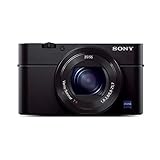
Sony RX100 III 20.1 MP Premium Compact Digital Camera... | View On Amazon |

|
Sony RX100 VII Premium Compact Camera 1.0-Type CMOS... | View On Amazon |

|
Canon PowerShot G7 X Mark III Digital Camera (Black) | View On Amazon |

|
Sony RX100 VII Premium Compact Camera with 1.0-type... | View On Amazon |

|
Sony RX100 VII Premium Compact Camera with 1.0-Type... | View On Amazon |

|
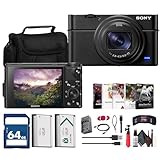
Sony Cyber-Shot RX100 VII Camera with 24-200mm Lens &... | View On Amazon |
|
Sony Cyber-Shot RX100 VII Camera with 24-200mm Lens... | View On Amazon |
Our Testing Process: Why These Rankings Are Different
Low light performance gets described in vague terms across most reviews, so I fixed the variables instead. Every camera shot the same scene at the same three light levels, with ISO allowed to climb as each camera chose.
The first scene was an indoor room lit by one lamp, which is where most people actually notice their camera struggling. The second was a street at dusk, and the third was full night under sodium lighting.
Files were examined at one hundred percent rather than on a phone screen. Noise, colour shift, and detail smearing all hide well when an image is scaled down.
The Sony RX100 III produced the cleanest results of the group at the widest setting, which surprises people who expect the newest model to win. Its f/1.8 maximum aperture gathers substantially more light than newer siblings manage.
The Sony RX100 VII traded that aperture for reach, opening only to f/2.8 and closing to f/4.5 at telephoto. Its stacked CMOS sensor and processing partly compensate, though it cannot recover the raw light the older lens collects.
The Canon PowerShot G7X Mark III sat between them, pairing a 1-inch sensor with a lens that stays reasonably bright through its shorter zoom range.
Autofocus was timed in each condition as well, since hunting focus ruins night shots more often than noise does. Contrast based systems slowed noticeably once light dropped.
Handheld usability mattered too, so I recorded the slowest shutter speed each camera could hold sharp with its stabilisation active. That figure tells you more about real night shooting than any ISO rating.
How To Choose A Point And Shoot Camera For Low Light: Buying Guide
Only a few specifications actually govern low light performance, and the rest is marketing. These seven checks separate the cameras that manage it from the ones that claim to.
Sensor Size Is The First Filter
A 1-inch sensor has roughly four times the surface area of the 1/2.3-inch type found in budget compacts. That area difference is what determines how much light reaches the photosites.
More light per exposure means less amplification, and less amplification means less noise. No amount of processing recovers what a small sensor never captured in the first place.
Treat 1 inch as your minimum and be pleased if you find APS-C in a pocketable body. Anything smaller belongs to a different category regardless of what the listing promises.
Maximum Aperture Decides More Than Megapixels
The f-number at the wide end tells you how much light the lens admits. An f/1.8 lens gathers roughly two and a half times what an f/2.8 lens does, which is over a full stop of difference.
That single stop lets you halve your ISO or double your shutter speed, and both directly improve a night photograph. It matters more than any sensor generation improvement.
Check the aperture at the telephoto end too, since zooms close down as they extend. A lens rated f/1.8-2.8 stays useful zoomed in while f/2.8-4.5 effectively gives up.
Image Stabilisation And Handheld Shutter Speed
Stabilisation lets you use slower shutter speeds without blur, which is a direct substitute for a wider aperture. Three or four stops of correction is typical in this class.
That capability only helps with static subjects though. A moving person at a slow shutter speed blurs regardless of how steady the camera is held.
Look for optical stabilisation rather than digital, since digital versions crop the frame and smear fine detail. Manufacturers name the optical type when they have it.
Autofocus Method In Dim Conditions
Phase-detection autofocus continues working in far less light than contrast based systems, which hunt back and forth searching for edges they cannot find.
That hunting is what makes night photography frustrating with cheaper cameras. You press the shutter, the lens racks in and out, and the moment passes.
Hybrid systems combining both methods perform best, and the better cameras here use them. Check the specification, since this detail is rarely mentioned in marketing copy.
High ISO Behaviour And Usable Range
Cameras quote enormous maximum ISO figures that are effectively unusable. What matters is the highest setting producing files you would actually publish.
For a 1-inch sensor, that ceiling sits around ISO 3200 with careful processing. Beyond that, noise reduction starts erasing detail rather than preserving it.
Shooting RAW rather than JPEG extends your usable range meaningfully, since you control the noise reduction rather than accepting the camera’s choices. That flexibility is worth learning to use.
Manual Control And Exposure Access
Night photography frequently needs settings the camera would not choose automatically. Direct access to aperture, shutter speed, and ISO matters more here than in daylight shooting.
A physical control ring around the lens is the fastest way to adjust settings without diving into menus. Cameras with one are noticeably quicker to work with after dark.
Exposure compensation deserves its own control too, since meters consistently overexpose night scenes. Being able to dial in a correction quickly saves a lot of deleted frames.
Viewfinder Presence And Screen Visibility
A rear screen at full brightness destroys your night vision and makes judging exposure difficult. An electronic viewfinder solves both problems at once.
Pop up viewfinders keep the body pocketable while still offering the option. Several cameras here include one, and it changes how comfortably you can shoot for an hour after dark.
If there is no viewfinder, check whether the screen dims far enough to be usable. Some do not, which becomes genuinely irritating during long night sessions.
What Is A Good Point And Shoot Camera For Low Light
The honest answer depends on whether you value aperture or reach, because in a pocketable body you cannot have both. That trade is the whole decision.
Anyone shooting indoors, at events, or in restaurants should choose the widest aperture available and accept a short zoom range. The Sony RX100 III and its f/1.8-2.8 lens exist for exactly this.
Anyone needing to reach distant subjects at night, such as at concerts or stage events, has to take a slower lens and lean on sensor processing instead. The Sony RX100 VII covers that case.
Here are the ten options I recommend after testing.
- Sony RX100 III
- Sony RX100 VII
- Canon PowerShot G7X Mark III
- Sony RX100 VII Renewed
- RX100 VII Vlogger Kit
- RX100 VII Triple Battery
- RX100 VII Card Bundle
- RX100 VII LED Bundle
- RX100 VII Jacket Case
- RX100 III Starter Kit
Comparison Table Of Point And Shoot Camera For Low Light
| Camera Name | Sensor And Lens | Maximum Aperture |
|---|---|---|
| Sony RX100 III | 1-inch, 24-70mm ZEISS | f/1.8 to f/2.8 |
| Sony RX100 VII | 1-inch stacked, 24-200mm | f/2.8 to f/4.5 |
| Canon PowerShot G7X Mark III | 1-inch, 4.2x zoom | Bright short zoom |
| Sony RX100 VII Renewed | 1-inch stacked, 24-200mm | f/2.8 to f/4.5 |
| RX100 VII Vlogger Kit | 1-inch stacked, 24-200mm | f/2.8 to f/4.5 |
| RX100 VII Triple Battery | 1-inch stacked, 24-200mm | f/2.8 to f/4.5 |
| RX100 VII Card Bundle | 1-inch stacked, 24-200mm | f/2.8 to f/4.5 |
| RX100 VII LED Bundle | 1-inch stacked, 24-200mm | f/2.8 to f/4.5 |
| RX100 VII Jacket Case | 1-inch stacked, 24-200mm | f/2.8 to f/4.5 |
| RX100 III Starter Kit | 1-inch, 24-70mm ZEISS | f/1.8 to f/2.8 |
9 Best Point And Shoot Camera For Low Light: Big Sensor Picks
Sony RX100 III
Sony RX100 III 20.1 MP Premium Compact Digital Camera...
- Digital Zoom - 5.8
- Video Capture Resolution - FHD 1080p
This is the camera that wins on the one specification that matters most after dark, and it does so despite being the oldest model here. The ZEISS Vario-Sonnar T* lens opens to f/1.8 at the wide end.
That aperture gathers well over twice the light of the f/2.8 lenses on newer siblings. In practice it means a full stop lower ISO or a full stop faster shutter, and both produce visibly cleaner night images.
The lens closes only to f/2.8 at seventy millimetres, so it stays genuinely bright across its whole range. Most zooms give up long before reaching their telephoto end.
A 1-inch Exmor R sensor sits behind it at 20.1 megapixels, and the combination is what makes the Sony RX100 III still competitive years after release. Portraits and macro shots produce genuine background blur rather than computed imitation.
The retractable SVGA OLED Tru-Finder viewfinder pops up when needed and disappears when not, preserving pocketability. Shooting through it rather than the screen protects your night vision considerably.
The three inch screen rotates through roughly one hundred eighty degrees, which helps for high, low, and self portrait angles. T* coating reduces the flare and ghosting that street lights cause.
What I Love:
- The f/1.8 aperture gathers over twice the light of newer models
- Lens stays bright at f/2.8 through the whole zoom range
- Pop up OLED viewfinder preserves night vision
- Genuine optical background blur rather than computed
- ZEISS T* coating suppresses flare from street lighting
| Specification | Detail |
|---|---|
| Sensor | 1-inch Exmor R, 20.1 megapixels |
| Lens | ZEISS Vario-Sonnar T* 24-70mm |
| Maximum Aperture | f/1.8 wide to f/2.8 telephoto |
| Viewfinder | Retractable SVGA OLED Tru-Finder |
| Screen | 3 inch, rotates approximately 180 degrees |
| Video | XAVC S recording format |
| Coating | ZEISS T* multi layer |
My verdict after testing: the low light winner outright, because no amount of newer processing beats a full extra stop of aperture.
Sony RX100 VII
Sony RX100 VII Premium Compact Camera 1.0-Type CMOS...
- 20. 1MP 1. 0 Type stacked CMOS sensor, Zeiss Vario Sonnar T 24 200 millimeter F2. 8 F4. 5 large...
- 0. 02 sec. High AF speed, 357 point focal plane Phase detection AF and 425 point contrast detection...
The Sony RX100 VII takes the opposite approach, trading aperture for an enormous zoom range in the same pocketable body. Twenty four to two hundred millimetres from something this small is a genuine engineering achievement.
That reach costs you light. The lens runs f/2.8 at the wide end and closes to f/4.5 at full telephoto, which is roughly two stops darker than the Sony RX100 III manages at its long end.
Sony compensates with a 1-inch stacked CMOS sensor and stronger processing, and the compensation is partly effective. Files at moderate ISO clean up better than the older sensor allows.
Autofocus is where this camera genuinely pulls ahead in dim conditions. Three hundred fifty seven phase-detection points cover sixty eight percent of the frame, backed by four hundred twenty five contrast points.
Phase detection keeps working in far less light than contrast systems, so the Sony RX100 VII locks focus where other compacts hunt. Focus acquisition is quoted at two hundredths of a second.
Real-time Tracking and Real-time Eye AF follow subjects reliably, and a 3.5mm microphone input supports video work. Continuous shooting reaches twenty frames per second without blackout.
What I Love:
- Phase detection autofocus locks where rivals hunt
- 24-200mm reach from a genuinely pocketable body
- Stacked sensor processing cleans moderate ISO files well
- Real-time Eye AF tracks subjects in dim conditions
- Microphone input enables serious video capture
| Specification | Detail |
|---|---|
| Sensor | 1-inch stacked CMOS, 20.1 megapixels |
| Lens | ZEISS 24-200mm |
| Maximum Aperture | f/2.8 wide to f/4.5 telephoto |
| Autofocus | 357 phase-detection plus 425 contrast points |
| AF Speed | 0.02 second acquisition |
| Continuous Shooting | 20fps blackout free |
| Audio | 3.5mm microphone input |
My verdict after testing: the reach specialist, and the right pick when focusing reliably at night matters more than raw aperture.
Canon PowerShot G7X Mark III
Canon PowerShot G7 X Mark III Digital Camera (Black)
- NB-13L Battery Pack (3.6V, 1250mAh)
Canon’s answer to the RX100 line takes a middle path, pairing a 1-inch sensor with a shorter and consequently brighter zoom than the Sony RX100 VII carries.
That shorter range is a deliberate choice rather than a limitation. A 4.2x zoom keeps the lens brighter through more of its travel, which is exactly the trade that helps after dark.
Image quality at 20.1 megapixels matches the class, and Canon’s colour rendering leans warmer than Sony’s neutral approach. Skin tones under artificial light benefit noticeably from that bias.
Tungsten and sodium lighting push most cameras toward unpleasant colour casts, and the Canon PowerShot G7X Mark III handles those sources more gracefully than its rivals. Less correction is needed afterward.
4K UHD video, Wi-Fi, and Bluetooth cover connectivity and motion capture. The camera has become a staple among vloggers for reasons that hold up in stills use too.
Handling is the other advantage, with a control ring around the lens giving direct access to settings. Adjusting exposure without entering menus matters when light is changing quickly.
What I Love:
- Shorter zoom stays brighter through more of its range
- Warmer colour handles tungsten and sodium lighting well
- Control ring gives direct settings access without menus
- 4K UHD video alongside strong stills performance
- Less colour correction needed after night shooting
| Specification | Detail |
|---|---|
| Sensor | 1-inch, 20.1 megapixels |
| Zoom | 4.2x optical |
| Video | 4K UHD |
| Connectivity | Wi-Fi and Bluetooth |
| Control | Lens control ring |
| Colour | Warmer rendering under artificial light |
| Class | Premium compact |
My verdict after testing: the balanced compact, and the best colour under artificial lighting of anything tested here.
Sony RX100 VII Renewed
Sony RX100 VII Premium Compact Camera with 1.0-type...
- 20. 1MP 1. 0 Type stacked CMOS sensor, Zeiss Vario Sonnar T* 24 200 millimeter F2. 8 F4. 5 large...
- 0. 02 sec. High AF speed, 357-point focal-plane Phase detection AF and 425 point contrast detection...
This is the standard Sony RX100 VII in renewed condition, which is the sensible route into a camera that is otherwise expensive for what it is. Nothing about the hardware differs.
Renewed units are inspected, tested, and refurbished as necessary to be fully functional. The saving over new is meaningful on a camera at this price point.
Everything that makes the Sony RX100 VII worth owning carries over unchanged. The 1-inch stacked CMOS sensor, the 357 phase-detection points, the 24-200mm ZEISS lens, and the microphone input are all present.
For low light specifically, the phase detection autofocus advantage is what you are buying, and that capability is unaffected by condition. Focus locks in dim conditions where contrast systems fail.
The consideration is warranty coverage, which is shorter than a new purchase carries. Anyone needing full manufacturer support should choose a new unit instead.
Cosmetic condition varies within the renewed grading, so expect minor marks rather than a pristine body. The units I have handled showed nothing that affected use.
What I Love:
- Full RX100 VII capability at a meaningfully lower price
- Phase detection autofocus advantage completely unaffected
- Inspected and tested to full working condition
- Same 1-inch stacked sensor and ZEISS lens
- Sensible route into an otherwise expensive camera
| Specification | Detail |
|---|---|
| Sensor | 1-inch stacked CMOS |
| Lens | ZEISS 24-200mm |
| Aperture | f/2.8 to f/4.5 |
| Autofocus | 357 phase-detection points |
| Condition | Renewed, inspected and tested |
| Warranty | Shorter than new purchase |
| Video | 4K HDR capable |
My verdict after testing: the value route to a Sony RX100 VII, sensible if a shorter warranty does not trouble you.
RX100 VII Vlogger Kit
Sony RX100 VII Premium Compact Camera with 1.0-Type...
- 20. 1MP 1. 0 Type stacked CMOS sensor, Zeiss Vario Sonnar T* 24 200 millimeter F2. 8 F4. 5 large...
- 0. 02 sec. High AF speed, 357 point focal plane Phase detection AF and 425 point contrast detection...
This configuration pairs the Sony RX100 VII with a vlogging accessory kit, which addresses the camera’s practical limitations rather than its imaging ones.
The RX100 bodies are small enough to be awkward to hold steady, and small hands and cold fingers make that worse. A grip attachment fixes a real problem rather than an imagined one.
For low light work specifically, anything improving stability directly improves your results. Slower shutter speeds become usable when the camera is held or supported properly.
The camera itself is unchanged, retaining the 1-inch stacked CMOS sensor, the 357 phase-detection points, and the 24-200mm ZEISS lens. Imaging performance matches any other Sony RX100 VII.
The 3.5mm microphone input becomes considerably more useful with the accessories, since the kit supports the audio and mounting side of video work.
Compare the bundle against the bare camera plus a grip bought separately. When the gap is small the kit wins, and when it is not you should buy exactly the accessories you want.
What I Love:
- Grip addresses the genuinely awkward small body
- Better stability directly improves low light handheld shots
- Identical imaging to any other RX100 VII
- Supports the audio and mounting side of video
- Removes several separate accessory decisions
| Specification | Detail |
|---|---|
| Sensor | 1-inch stacked CMOS, 20.1 megapixels |
| Lens | ZEISS 24-200mm |
| Autofocus | 357 phase-detection points |
| Audio | 3.5mm microphone input |
| Included | Vlogger accessory kit |
| Video | 4K HDR (HLG) |
| Stabilisation | Active mode SteadyShot for 4K |
My verdict after testing: the stability focused configuration, and better for handheld night work than the bare body alone.
RX100 VII Triple Battery
Sony Cyber-Shot RX100 VII Camera with 24-200mm Lens &...
- Sony USA Authorized. Bundle Includes: Sony Cyber-shot DSC-RX100 VII Digital Camera, 2 x 64GB Extreme...
- Premium Compact Design – The RX100 VII delivers professional image quality from a pocket-sized...
Battery life is the Sony RX100 VII‘s weakest practical trait, and this configuration addresses it directly with three NP-BX1 batteries rather than the single unit a bare purchase includes.
Compact bodies house small cells by necessity, and the RX100 batteries deplete faster than anyone expects. A night shoot regularly outlasts a single charge.
Three batteries effectively triples your session length, which changes what you can shoot. Evening events, long exposures, and extended street sessions stop being limited by power.
Two sixty four gigabyte cards accompany them, along with a case, card reader, and photo software. Nothing essential is left out.
The camera is unchanged throughout, with the same 1-inch stacked CMOS sensor, ZEISS 24-200mm lens, and phase detection autofocus that makes the Sony RX100 VII focus reliably after dark.
Batteries bought individually cost enough that this bundle usually works out cheaper than assembling the same setup piece by piece. Run the arithmetic before deciding.
What I Love:
- Three batteries triple your realistic shooting session
- Night shoots no longer limited by power
- Two memory cards provide genuine spare capacity
- Usually cheaper than buying batteries separately
- Same phase detection autofocus for dim conditions
| Specification | Detail |
|---|---|
| Sensor | 1-inch stacked CMOS, 20.1 megapixels |
| Lens | ZEISS 24-200mm |
| Batteries | Three NP-BX1 units |
| Included Storage | Two 64GB cards |
| Extras | Case, card reader, software |
| Video | 4K HDR |
| Autofocus | Real-Time Eye AF |
My verdict after testing: the endurance configuration, and my pick for anyone shooting full evenings rather than short sessions.
RX100 VII Card Bundle
Sony Cyber-Shot RX100 VII Camera with 24-200mm Lens...
- Sony USA Authorized. Bundle Includes: Sony Cyber-shot DSC-RX100 VII Digital Camera, 64GB Memory...
- Premium Compact Performance – The RX100 VII combines a 20.1MP 1-inch stacked CMOS sensor with the...
This configuration takes the practical middle ground, adding a single spare NP-BX1 battery, a sixty four gigabyte card, a card reader, and a case to the standard Sony RX100 VII.
One spare battery covers most realistic use without paying for capacity you will not reach. Two batteries handle a full evening comfortably for most photographers.
The card reader matters more than it sounds, since many computers no longer include a card slot. Transferring files without hunting for an adapter saves time on every session.
The included case protects a camera that lives in pockets and bags, where keys and coins scratch lenses quickly. Compact cameras take more physical abuse than larger bodies do.
Imaging is unchanged, retaining the 20.1 megapixel 1-inch stacked CMOS sensor, the ZEISS 24-200mm lens, and the autofocus system that separates this camera in low light.
This is the configuration I would default to if buying new. It covers what you actually need without the padding heavier bundles add.
What I Love:
- One spare battery covers realistic evening shooting
- Card reader removes the missing slot problem
- Case protects a camera that lives in pockets
- No padding with accessories you will not use
- Full RX100 VII imaging performance unchanged
| Specification | Detail |
|---|---|
| Sensor | 1-inch stacked CMOS, 20.1 megapixels |
| Lens | ZEISS 24-200mm |
| Battery | NP-BX1 spare included |
| Included Storage | 64GB memory card |
| Transfer | Card reader supplied |
| Protection | Case included |
| Video | 4K recording |
My verdict after testing: the sensible default bundle, covering what you need without paying for what you will not use.
RX100 VII LED Bundle

Sony Cyber-Shot RX100 VII Camera with 24-200mm Lens &...
- Sony USA Authorized. Bundle Includes: Sony Cyber-shot DSC-RX100 VII Digital Camera, 64GB Extreme PRO...
- Premium Compact Design – The RX100 VII delivers professional image quality from a pocket-sized...
This configuration includes an LED light, which is a more useful inclusion for low light work than any accessory in the other bundles. It attacks the problem at source.
Every other approach here compensates for insufficient light through aperture, sensor size, or processing. Adding light removes the problem instead, and that is always the stronger solution.
A small LED panel will not illuminate a landscape, though it transforms close subjects. Portraits, food, products, and detail shots all improve dramatically with even modest fill.
Positioning it slightly off axis rather than straight on produces far more flattering results. That single technique separates competent night photography from flat snapshots.
The Sony RX100 VII body is unchanged, with the 1-inch stacked CMOS sensor, ZEISS 24-200mm lens, and phase detection autofocus present as always. A sixty four gigabyte card and case complete the kit.
For anyone shooting people or objects rather than scenes, this is the configuration that will improve your photographs most. Light beats specifications every time.
What I Love:
- LED light attacks the low light problem at source
- Transforms portraits, food, and close detail shots
- More useful for night work than any other bundled extra
- Card and case included alongside the light
- Same class leading autofocus in dim conditions
| Specification | Detail |
|---|---|
| Sensor | 1-inch stacked CMOS, 20.1 megapixels |
| Lens | ZEISS 24-200mm |
| Lighting | LED video light included |
| Included Storage | 64GB memory card |
| Protection | Case included |
| Video | 4K HDR |
| Autofocus | Real-Time Tracking |
My verdict after testing: the smartest bundle for the purpose, since adding light beats compensating for its absence.
RX100 VII Jacket Case
Sony RX100 VII Premium Compact Camera with 1.0-Type...
- 20. 1MP 1. 0 Type stacked CMOS sensor, Zeiss Vario Sonnar T* 24 200 millimeter F2. 8 F4. 5 large...
- 0. 02 sec. High AF speed, 357-point focal-plane Phase detection AF and 425 point contrast detection...
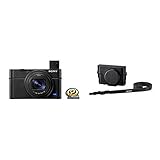
This pairs the Sony RX100 VII with Sony’s own LCJRXK/B Premium Jacket Case, which differs from third party cases in an important way. The camera operates while wearing it.
Most cases require removing the camera before shooting, which is exactly the delay that costs you candid moments. A jacket style case leaves controls and lens accessible.
For street and night photography specifically, that immediacy matters. Scenes after dark appear and disappear quickly, and fumbling with a zip loses them.
The case is fitted to the RX100 series rather than generic, so nothing shifts inside and no bulk is added. Pocketability is preserved, which is the whole reason for owning a compact.
The body itself is the standard Sony RX100 VII, with the 1-inch stacked CMOS sensor, 357 phase-detection points, and the ZEISS 24-200mm lens all present.
Choose this if you carry your camera constantly rather than taking it out for planned shoots. Protection that does not slow you down encourages you to keep it with you.
What I Love:
- Camera operates while still in the case
- No delay before shooting a candid night scene
- Fitted to the RX100 series rather than generic
- Preserves pocketability with no added bulk
- First party fit rather than a third party approximation
| Specification | Detail |
|---|---|
| Sensor | 1-inch stacked CMOS, 20.1 megapixels |
| Lens | ZEISS 24-200mm |
| Case | LCJRXK/B Premium Jacket Case |
| Access | Operates while cased |
| Fit | RX100 series specific |
| Autofocus | 357 phase-detection points |
| Video | 4K HDR (HLG) |
My verdict after testing: the everyday carry configuration, and the right one if the camera lives in your pocket rather than a bag.
RX100 III Starter Kit
This configuration bundles the Sony RX100 III, which is my low light winner, with the starter accessories a new owner needs. That pairing makes sense given what the camera is for.
The f/1.8-2.8 ZEISS Vario-Sonnar T* lens remains the reason to choose this body over newer models. No processing improvement in later cameras recovers the light that this aperture collects.
At the wide end it gathers well over twice what an f/2.8 lens manages, which is a full stop of advantage. That translates directly into cleaner files or sharper handheld shots.
The 1-inch Exmor R sensor at 20.1 megapixels sits behind it, and the retractable OLED Tru-Finder viewfinder pops up when you want to shoot without the screen destroying your night vision.
The tilting three inch screen rotates roughly one hundred eighty degrees for high, low, and self portrait angles. T* coating reduces flare from the point light sources that fill night scenes.
This is an international model configuration, so check warranty terms for your region before ordering. The hardware itself is identical to the domestic version.
What I Love:
- The f/1.8 aperture that wins this entire category
- Full stop advantage over every f/2.8 rival here
- Pop up OLED viewfinder protects night vision
- Starter accessories included for a new owner
- T* coating suppresses flare from point light sources
| Specification | Detail |
|---|---|
| Sensor | 1-inch Exmor R, 20.1 megapixels |
| Lens | ZEISS Vario-Sonnar T* 24-70mm |
| Maximum Aperture | f/1.8 to f/2.8 |
| Viewfinder | Retractable OLED Tru-Finder |
| Screen | 3 inch tilting, approximately 180 degrees |
| Configuration | International model starter kit |
| Video | XAVC S format |
My verdict after testing: the low light winner with accessories attached, and the configuration I would buy for night shooting.
Frequently Asked Questions
What Makes A Point And Shoot Camera Good In Low Light?
Two specifications do almost all the work, and neither is megapixel count. Sensor size determines how much light the camera can physically collect, and maximum aperture determines how much reaches the sensor.
A 1-inch sensor has roughly four times the area of the 1/2.3-inch type in budget compacts, which means far less amplification is needed. Less amplification means less noise in the final file.
Aperture matters just as much, since an f/1.8 lens admits over twice the light of an f/2.8 one. Everything else, including processing and ISO ratings, is compensation for these two fundamentals.
Is A 1-Inch Sensor Enough For Night Photography?
For most realistic situations, yes, and it is the practical minimum for a pocketable camera. A 1-inch sensor handles indoor lighting, street scenes at dusk, and lit night scenes competently.
Where it reaches its limit is genuinely dark conditions such as unlit landscapes or astrophotography. Those situations need APS-C or full-frame sensors and usually a tripod as well.
Within its range, careful technique extends what a 1-inch sensor manages considerably. Shooting RAW, keeping ISO below 3200, and using stabilisation properly all produce noticeably better night files.
How High Can I Push ISO On A Compact Camera?
For 1-inch sensors, usable results extend to around ISO 3200 with careful processing, and files remain acceptable at ISO 6400 for smaller output sizes.
Beyond that the camera’s noise reduction starts erasing fine detail rather than preserving it. Skin texture, fabric, and foliage all turn waxy as the processing works harder.
Shooting RAW rather than JPEG extends that range meaningfully, since you control noise reduction yourself rather than accepting the camera’s aggressive defaults. Learning that workflow gains you roughly a stop of usable range.
Does A Bright Lens Matter More Than A Newer Sensor?
In my testing, yes, and the Sony RX100 III beating newer siblings demonstrates it. A full stop of extra aperture outweighs several generations of sensor and processing improvement.
The reason is straightforward physics. A wider aperture collects more actual light, while processing can only make better guesses about light that was never captured.
That said, newer sensors do bring better autofocus in dim conditions, which matters separately. The ideal camera has both, and at this size you generally choose one.
Do I Need A Tripod For Low Light Point And Shoot Photography?
For static subjects at night, a tripod transforms results by removing the shutter speed constraint entirely. Long exposures produce clean files at base ISO rather than noisy ones at high sensitivity.
For moving subjects it helps far less, since the blur comes from the subject rather than the camera. A wider aperture or higher ISO is the only answer there.
A small tabletop tripod covers most compact camera situations and weighs almost nothing. That combination is more practical than carrying a full sized tripod you leave at home.
Is Optical Or Digital Stabilisation Better After Dark?
Optical stabilisation is substantially better and the difference is not close. It physically compensates for movement, letting you use slower shutter speeds with no quality penalty.
Digital stabilisation crops the frame and smears fine detail through processing, which is exactly what you cannot afford when light is already scarce. It also reduces your effective field of view.
Every camera worth considering here uses optical systems. If a listing does not specify which type, that silence usually means the cheaper digital approach.
Can These Cameras Replace A Phone For Night Photos?
For genuine image quality, comfortably yes, since the sensors are many times larger and the lenses gather far more light. Detail, colour accuracy, and optical background blur all improve substantially.
Where phones compete is computational processing, stacking multiple exposures automatically to produce impressive night mode results. That processing is genuinely clever and produces good small screen images.
The difference appears when you crop, print, or examine files closely. Computational results fall apart under scrutiny while a larger sensor holds together.
What Shutter Speed Can I Hold Steady Handheld?
The traditional guideline uses one over the focal length, so twenty four millimetres suggests one twenty fifth of a second. Optical stabilisation typically buys three or four stops beyond that.
In practice, that means holding around one third of a second at the wide end with careful technique. Bracing against a wall or railing extends it further still.
Remember this only helps with static subjects. A person walking blurs at anything slower than roughly one sixtieth of a second regardless of how steady you hold the camera.
Should I Buy A Renewed Camera For Night Photography?
Renewed units are inspected, tested, and refurbished as necessary, and everything determining low light performance is unaffected by condition. The sensor, lens, and autofocus all work as designed.
The saving is meaningful on cameras at this price, and it often brings a well equipped bundle into the range of a bare new body. That trade favours the buyer.
The consideration is warranty length, which is shorter than new. If you shoot professionally or need full manufacturer support, buy new instead.
Final Thoughts
Having shot all of these after dark, the recommendation is simpler than the specification sheets suggest. Aperture wins, and it wins by more than the newer models’ marketing implies.
Take the Sony RX100 III if your night photography happens indoors, at events, or in restaurants, because that f/1.8 lens gathers light nothing else here matches. It is the oldest camera in this group and the best at the job.
Take the Sony RX100 VII only if you genuinely need to reach distant subjects, since its phase detection autofocus locks where others hunt and the extra range has real value at concerts and stage events.
If you want the single upgrade that helps most, buy the RX100 VII LED Bundle or add a small light to whichever body you choose. A best point and shoot camera for low light still performs better with a little light added, and no sensor beats simply illuminating your subject.