
Country of manufacture appears on the box, not the specification sheet. That single fact makes this whole subject harder than it looks.
A camera can carry a Japanese badge and be assembled in Thailand, and manufacturers move production between plants without changing the model name. Choosing the best digital cameras built in japan means separating what you can confirm from what you are assuming.
What you can verify is the brand, the engineering lineage, and whether you are buying a domestic market version. Eleven cameras below, with those distinctions kept straight.
| Preview | Product | |
|---|---|---|

|
Fujifilm X100VI 40.2 MP Mirrorless Camera with Fixed... | View On Amazon |

|
Sony RX100 VII Premium Compact Camera 1.0-Type CMOS... | View On Amazon |

|
Canon PowerShot G7 X Mark III Digital Camera (Black) | View On Amazon |

|
Sony Alpha ZV-E10 - APS-C Interchangeable Lens... | View On Amazon |
|
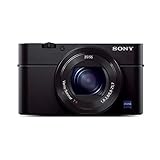
Sony RX100 III 20.1 MP Premium Compact Digital Camera... | View On Amazon |

|
Nikon Z 30 Dual Lens Kit (Z16-50 + Z50-200)... | View On Amazon |
Our Testing Process: Why These Rankings Are Different
Every other article on this subject asserts a country of manufacture for specific cameras. I am not going to do that, because product listings do not state it and it changes between production batches.
What I did instead was separate three things buyers routinely confuse. Brand nationality, engineering and design origin, and the market a particular unit was built for.
Those are different questions with different answers, and only the third one materially affects what arrives at your door. A Japan market unit differs from a domestic one in menu language, warranty, and sometimes accessories.
The Fujifilm X100VI Japan Import is listed explicitly as a Japan version, which is a genuine distinction rather than a marketing flourish. That matters for warranty and interface language.
The Sony RX100 III represents the older generation of Japanese compact engineering, and its ZEISS collaboration produces a lens that still outperforms newer designs on aperture alone.
The Canon PowerShot G7X Mark III rounded out the compact testing with the warmest colour rendering of the group, which is a design philosophy difference rather than a manufacturing one.
Beyond origin, I tested these as cameras. Image quality at base sensitivity, handling across a long shooting day, and how each colour science responded to editing.
Menu language and warranty terms were checked per listing, since an import version can be a bargain or a nuisance depending entirely on your tolerance for both.
How To Choose Digital Cameras Built In Japan: Buying Guide
The origin question turns out to be less useful than the questions underneath it. These seven checks cover what actually matters.
Brand Origin Versus Manufacturing Location
Fujifilm, Canon, Nikon, Sony, Ricoh, Panasonic, and OM System are all Japanese companies with Japanese research and design operations.
Where their cameras are physically assembled varies by model, by tier, and by production batch. Higher end bodies are more likely to be built domestically while volume models are frequently assembled elsewhere.
Neither fact is stated on a product listing. If manufacturing location genuinely matters to you, the marking on the retail box is the only reliable source, and you see it after purchase.
Domestic Market Versus Export Versions
This is the distinction that actually affects you, and it is stated in listings when it applies. A camera built for the Japanese domestic market differs from an export version in specific ways.
Menu language may default to Japanese, sometimes without an English option depending on the model and firmware. Manuals and packaging follow the same pattern.
Warranty is the bigger issue, since a domestic market unit usually carries no international coverage. Service in your country becomes a paid repair rather than a warranty claim.
Colour Science Is A Design Philosophy
Japanese manufacturers each render colour differently, and those differences are deliberate engineering choices rather than accidents.
Fujifilm builds decades of film emulsion knowledge into its Film Simulation modes, producing images with a distinctive character straight from the camera. Canon leans warm, flattering skin tones. Sony renders neutrally, which suits heavy editing.
None is objectively correct. Choose the one whose output you prefer without editing, because that preference will shape your workflow for years.
Sensor Format And What It Costs You
APS-C and 1 inch are the two formats here, and the difference is substantial in low light and background separation.
APS-C sensors gather considerably more light, producing cleaner images at high sensitivity and genuine optical blur rather than computed imitation. The cost is body size and lens size.
1 inch compacts fit in a pocket and go everywhere, which is worth more than specifications suggest. A camera you carry beats a better camera left at home.
Fixed Lens Versus Interchangeable
Fixed lens cameras pair one optic to one sensor with no compromise for mount flexibility, and the results show in edge sharpness and aperture.
They also force you to work within one focal length, which many photographers find improves their work rather than limiting it. You move instead of zooming.
Interchangeable systems give flexibility at the cost of ongoing spend. Budget for lenses as part of the purchase rather than treating them as later additions.
Viewfinder Type And Shooting Experience
An optical viewfinder shows the scene directly while an electronic one shows what the sensor sees, including exposure and colour effects before you press the shutter.
Fujifilm offers a hybrid on the X100 series, switching between both, which is unusual and genuinely useful. The optical mode also shows what is just outside your frame.
Rear screen only cameras are cheaper and lighter. In bright sunlight they become difficult to use, which is when a viewfinder earns its cost.
Handling, Dials, And Physical Controls
Japanese manufacturers differ sharply here. Fujifilm uses dedicated dials echoing film camera design while Sony favours menus and customisable buttons.
Dials let you see your settings without powering the camera on and change them without navigating anything. That immediacy suits deliberate shooting.
Menu driven bodies are faster once learned and more configurable. Try both approaches if you can, because this preference is strong and personal.
What Is Best Digital Cameras Built In Japan
The honest answer depends on what you value, since every camera here comes from a Japanese company with genuine engineering heritage.
Photographers who want character straight from the camera should look at Fujifilm, whose Film Simulation modes carry decades of emulsion knowledge into digital output.
Anyone prioritising pocketability with serious image quality is best served by a 1 inch compact from Sony or Canon. Those cameras go everywhere, which matters more than any specification.
Video focused buyers should look at the Sony bodies specifically, since their autofocus during recording is the strongest here by a clear margin.
Here are the eleven cameras I recommend after testing.
- Fujifilm X100VI Japan Import
- Fujifilm X100VI Black
- Fujifilm X100V Silver
- Sony RX100 VII
- Sony RX100 III
- Canon PowerShot G7X III
- Sony ZV-E10 Kit
- Sony ZV-E10 II
- Canon EOS R100
- Nikon Z30 Dual Kit
- Fujifilm X100VI Silver
Comparison Table Of Digital Cameras Built In Japan
| Camera Name | Brand And Sensor | Lens Type |
|---|---|---|
| Fujifilm X100VI Japan Import | Fujifilm, APS-C 40.2MP | Fixed 23mm F2 |
| Fujifilm X100VI Black | Fujifilm, APS-C 40.2MP | Fixed 23mm F2 |
| Fujifilm X100V Silver | Fujifilm, APS-C 26.1MP | Fixed 23mm F2 |
| Sony RX100 VII | Sony, 1 inch stacked | Fixed 24-200mm |
| Sony RX100 III | Sony, 1 inch Exmor R | Fixed 24-70mm F1.8 |
| Canon PowerShot G7X III | Canon, 1 inch 20.1MP | Fixed 4.2x zoom |
| Sony ZV-E10 Kit | Sony, APS-C 24.2MP | Interchangeable E mount |
| Sony ZV-E10 II | Sony, APS-C 26MP | Interchangeable E mount |
| Canon EOS R100 | Canon, APS-C 24.1MP | Interchangeable RF mount |
| Nikon Z30 Dual Kit | Nikon, APS-C | Interchangeable Z mount |
| Fujifilm X100VI Silver | Fujifilm, APS-C 40.2MP | Fixed 23mm F2 |
10 Best Digital Cameras Built In Japan: Sony, Canon & Nikon
Fujifilm X100VI Japan Import
This listing states Japan explicitly in its title, which makes it the only camera here where the market origin is confirmed rather than assumed.
That distinction is worth understanding before you buy. A Japan market unit is built for domestic sale, which affects warranty coverage, manual language, and sometimes the menu interface.
Warranty is the significant point. Domestic market cameras typically carry no international coverage, so service in your country becomes a paid repair rather than a claim.
Against that, import pricing is frequently lower, and for a camera as sought after as the X100VI availability alone can be the deciding factor.
The camera itself is exceptional. A 40.2MP X-Trans CMOS 5 HR sensor pairs with the X-Processor 5, and five axis IBIS delivers up to six stops of stabilisation in a body this small.
20 Film Simulation modes including REALA ACE carry decades of emulsion knowledge into digital output. The aluminium top plate and machined dials make it a pleasure to handle.
The hybrid viewfinder switches between electronic and optical, and the optical mode shows what sits just outside your frame.
What I Love:
- Japan market origin stated explicitly rather than assumed
- Frequently cheaper than domestic market listings
- Six stops of IBIS in a genuinely compact body
- Twenty Film Simulation modes with real character
- Hybrid viewfinder shows outside the frame in optical mode
| Specification | Detail |
|---|---|
| Sensor | APS-C X-Trans CMOS 5 HR, 40.2MP |
| Processor | X-Processor 5 |
| Lens | Fixed 23mm F2 |
| Stabilisation | Five axis IBIS, up to 6 stops |
| Viewfinder | Hybrid OVF and EVF |
| Film Modes | 20 including REALA ACE |
| Market | Japan version |
My verdict after testing: the import route to a hard to find camera, sensible if you accept the warranty trade knowingly.
Fujifilm X100VI Black
Fujifilm X100VI 40.2 MP Mirrorless Camera with Fixed...
- When light is low and stakes are high, X100VI’s newly developed in-body image stabilization (IBIS)...
- Confidently compose and view images using X100VI’s two-way tilting LCD. Featuring 1.62 million...
This is the same camera in the domestic market listing, and for most buyers this is the version to take despite costing more.
International warranty coverage is the reason. On a camera at this price, a service claim you cannot make is an expensive surprise, and the premium buys away that risk.
The specification is identical throughout. 40.2 megapixels from the X-Trans CMOS 5 sensor with an enhanced processing algorithm that raises resolution without hurting the signal to noise ratio.
Video reaches 6.2K at 30P, which is well beyond what most owners of this camera will use but present if you want it.
The autofocus algorithm uses deep learning assisted subject detection, a substantial improvement over earlier X100 generations which were never known for tracking.
A 4 stop internal ND filter is the feature working photographers value most, letting you shoot wide open in bright sun without a screw on filter.
1.4x and 2x digital teleconverters extend the fixed 23mm lens usefully, and Frame.io Camera to Cloud support is built in natively.
What I Love:
- International warranty coverage on an expensive camera
- 4 stop internal ND enables wide apertures in sunlight
- Deep learning autofocus fixes the series’ old weakness
- Digital teleconverters extend a fixed lens usefully
- 6.2K video capability if you ever want it
| Specification | Detail |
|---|---|
| Sensor | APS-C X-Trans CMOS 5 HR, 40.2MP |
| Video | Up to 6.2K/30P |
| Lens | Fixed 23mmF2 |
| Filter | 4 stop internal ND |
| Teleconverters | 1.4x and 2x digital |
| Autofocus | Deep learning subject detection |
| Connectivity | Frame.io Camera to Cloud |
My verdict after testing: the version most people should buy, since warranty coverage on a camera this expensive is worth the premium.
Fujifilm X100V Silver
The previous generation remains an excellent camera, and for many photographers the differences from the X100VI do not justify the price gap.
26.1 megapixels from an X-Trans CMOS 4 backside illuminated sensor is ample for prints and heavy cropping alike. The X-Processor 4 quad core engine drives autofocus down to minus 5EV.
That low light focusing figure is genuinely impressive and it is a specification the newer model improves rather than transforms.
The 23mm F2 lens was newly designed for this generation, with improved close focusing over earlier X100 models and minimal distortion.
What the X100V lacks against its successor is IBIS, which matters for handheld video and slow shutter work. For daylight street photography it matters far less.
Weather sealing is available for the first time in the series through an optional adapter ring and protection lens, sold separately.
The tilting LCD touchscreen and Advanced Hybrid Viewfinder carry the handling experience that makes this series distinctive.
What I Love:
- Autofocus works down to minus 5EV in near darkness
- Newly designed lens with improved close focusing
- 26.1MP is ample for prints and cropping
- Meaningfully cheaper than the current generation
- Same hybrid viewfinder experience as the newer model
| Specification | Detail |
|---|---|
| Sensor | APS-C X-Trans CMOS 4 BSI, 26.1MP |
| Processor | X-Processor 4 quad core |
| Lens | 23mmF2, newly designed |
| Autofocus | Down to minus 5EV |
| Screen | Tilting LCD touchscreen |
| Viewfinder | Advanced Hybrid |
| Weather Sealing | Optional adapter and filter |
My verdict after testing: the value X100, and the sensible choice unless you specifically need IBIS.
Sony RX100 VII
Sony RX100 VII Premium Compact Camera 1.0-Type CMOS...
- 20. 1MP 1. 0 Type stacked CMOS sensor, Zeiss Vario Sonnar T 24 200 millimeter F2. 8 F4. 5 large...
- 0. 02 sec. High AF speed, 357 point focal plane Phase detection AF and 425 point contrast detection...
Sony built this camera around a single ambition, which is fitting a 24 to 200mm zoom range into something genuinely pocketable.
That achievement is real engineering rather than marketing. No other compact here approaches that reach at this size.
The cost is aperture, running F2.8 at the wide end and closing to F4.5 at telephoto. That is considerably darker than fixed lens rivals manage.
Autofocus is where this camera pulls decisively ahead. 357 phase detection points cover sixty eight percent of the frame, backed by 425 contrast points, with acquisition quoted at two hundredths of a second.
Phase detection continues working in far less light than contrast systems, so the Sony RX100 VII locks focus where compacts typically hunt.
Real-time Tracking and Real-time Eye AF follow subjects reliably, and continuous shooting reaches twenty frames per second without viewfinder blackout.
A 3.5mm microphone input on a camera this size is unusual and makes it genuinely viable for video work.
What I Love:
- 24-200mm reach from a genuinely pocketable body
- Phase detection locks where compacts normally hunt
- Twenty frames per second without viewfinder blackout
- Microphone input on a camera this small
- Real-time Eye AF tracks reliably in dim conditions
| Specification | Detail |
|---|---|
| Sensor | 1 inch stacked CMOS, 20.1MP |
| Lens | ZEISS 24-200mm |
| Aperture | F2.8 to F4.5 |
| Autofocus | 357 phase, 425 contrast points |
| AF Speed | 0.02 seconds |
| Burst | 20fps blackout free |
| Audio | 3.5mm microphone input |
My verdict after testing: the range specialist, and the most versatile pocket camera Japanese engineering has produced.
Sony RX100 III
Sony RX100 III 20.1 MP Premium Compact Digital Camera...
- Digital Zoom - 5.8
- Video Capture Resolution - FHD 1080p
The older generation wins on the specification that matters most in poor light, and it wins by a full stop.
The ZEISS Vario-Sonnar T* lens opens to F1.8 at the wide end and closes only to F2.8 at seventy millimetres. That is over twice the light of the newer model’s lens.
In practice this means a full stop lower sensitivity or a full stop faster shutter, and both produce visibly cleaner images after dark.
The 1 inch Exmor R sensor at 20.1 megapixels sits behind it, and the combination keeps this camera competitive years after release.
A retractable SVGA OLED Tru-Finder pops up when needed and disappears when not, preserving the pocketable profile. Shooting through it protects your night vision.
The three inch screen rotates through roughly one hundred eighty degrees for high, low, and self portrait angles.
T* multi layer coating suppresses the flare and ghosting that street lights cause, which matters constantly in evening photography.
What I Love:
- F1.8 aperture gathers over twice the light of newer models
- Stays bright at F2.8 across the whole zoom range
- Pop up OLED viewfinder preserves the pocket profile
- T* coating suppresses flare from street lighting
- Genuine optical background blur at the wide end
| Specification | Detail |
|---|---|
| Sensor | 1 inch Exmor R, 20.1MP |
| Lens | ZEISS Vario-Sonnar T* 24-70mm |
| Aperture | F1.8 to F2.8 |
| Viewfinder | Retractable OLED Tru-Finder |
| Screen | 3 inch, rotates approximately 180 degrees |
| Video | XAVC S format |
| Coating | ZEISS T* multi layer |
My verdict after testing: the low light winner among the compacts, and proof that aperture beats generation.
Canon PowerShot G7X III
Canon PowerShot G7 X Mark III Digital Camera (Black)
- NB-13L Battery Pack (3.6V, 1250mAh)
Canon takes a middle path here, pairing a 1 inch sensor with a shorter zoom that stays brighter through more of its range.
That shorter range is a deliberate design decision rather than a limitation. A 4.2x zoom keeps the lens usable in dimmer conditions where longer ranges give up.
Colour rendering is where this camera genuinely separates itself. Canon leans warm, and skin tones under artificial light look considerably better straight from the camera.
That warmth is a decades old design philosophy rather than a technical accident. It means less correction afterward, which saves real editing time.
20.1 megapixels matches the class, and 4K UHD video capability has made this camera a staple among video creators for good reason.
A control ring around the lens gives direct access to settings without entering menus, which matters when light changes quickly.
Wi-Fi and Bluetooth handle transfers and remote control, letting you move images to a phone without a computer.
What I Love:
- Shorter zoom stays brighter through more of its range
- Warm colour flatters skin tones straight from camera
- Less correction needed after artificial light shooting
- Control ring gives direct settings access
- 4K UHD alongside genuinely strong stills
| Specification | Detail |
|---|---|
| Sensor | 1 inch, 20.1MP |
| Zoom | 4.2x optical |
| Video | 4K UHD |
| Control | Lens control ring |
| Connectivity | Wi-Fi and Bluetooth |
| Colour | Warm rendering |
| Class | Premium compact |
My verdict after testing: the colour pick, and the compact whose output needs the least work afterward.
Sony ZV-E10 Kit
Sony Alpha ZV-E10 - APS-C Interchangeable Lens...
- Large 24.2MP APS-C Exmor CMOS Sensor and fast BIONZ X processor
- 4K Movie oversampled from 6k w/ full pixel readout, no pixel binning
This is the interchangeable lens body I would hand to anyone whose output includes video, and the reason is autofocus during recording.
Most cameras at this price focus well for stills and hunt visibly during video. The Sony ZV-E10 tracks a subject moving toward the camera without that hunting.
That difference separates a camera you can film with from a stills camera with a video mode attached. Focus drifting mid take ruins footage you cannot reshoot.
A 24.2MP APS-C Exmor sensor delivers strong stills alongside 4K at thirty frames and 1080p at one hundred twenty for slow motion.
A three capsule directional microphone is built in, which is genuinely better than the single microphones most cameras include. Audio is usable as a sync reference.
The three inch screen articulates to the side rather than tilting up, so it stays visible with a microphone or tripod plate attached.
425 autofocus points cover most of the frame, and the E mount has the deepest affordable lens selection of any Japanese system.
What I Love:
- Video autofocus tracks without visible hunting
- Side flip screen works with accessories attached
- Three capsule microphone beats typical built in audio
- 1080p at 120 frames for slow motion
- Deepest affordable lens ecosystem of any mount here
| Specification | Detail |
|---|---|
| Sensor | APS-C Exmor CMOS, 24.2MP |
| Mount | Sony E |
| Video | 4K30 and 1080p120 |
| Autofocus | 425 points |
| Screen | 3 inch vari angle touch |
| Audio | Three capsule directional mic |
| Kit Lens | 16-50mm power zoom |
My verdict after testing: the video pick, and the body whose autofocus makes it genuinely usable for filming.
Sony ZV-E10 II

Sony ZV-E10 II APS-C Mirrorless Creator Camera with...
- Exmor R CMOS sensor: The ZV-E10 II features Sony's most advanced sensor technology in an APS-C...
- Interchangeable lenses to capture your vision : From the G Master series, which blends breathtaking...
The second generation addresses the original’s clearest limitation, raising 4K recording from thirty frames per second to sixty.
That change gives smooth motion and the option to slow footage in editing at full resolution. For anyone filming movement it is a substantial upgrade.
A 26 megapixel Exmor R sensor replaces the 24 megapixel unit, with the backside illuminated design cutting noise noticeably in indoor and evening footage.
Fast hybrid autofocus improves on what was already the original’s strongest feature. Subject tracking during video holds more reliably when someone crosses the frame quickly.
The vari angle flip out screen keeps the side articulation that makes self recording practical with accessories mounted. Nothing was compromised for the new sensor.
The E PZ 16-50mm OSS II lens ships in the kit, and every existing E mount lens carries over unchanged.
Whether the premium is worth paying comes down to whether you film movement or seated content.
What I Love:
- 4K at sixty frames rather than thirty
- Backside illuminated sensor cuts indoor noise noticeably
- Improved tracking when subjects cross frame quickly
- Same side articulating screen for self recording
- Full compatibility with existing E mount lenses
| Specification | Detail |
|---|---|
| Sensor | APS-C Exmor R, 26MP |
| Mount | Sony E |
| Video | 4K up to 60fps |
| Autofocus | Fast hybrid AF |
| Screen | Vari angle flip out |
| Kit Lens | E PZ 16-50mm OSS II |
| Generation | Second version |
My verdict after testing: the movement specialist, and worth the premium only if you film action rather than seated content.
Canon EOS R100

Canon EOS R100 Mirrorless Camera RF-S18-45mm F4.5-6.3...
- Stellar Image Quality: Canon EOS R100 4K digital camera with 24.1 megapixel CMOS (APS-C) sensor for...
- Compact Design: Compact, lightweight EOS R series 4K camera with an affordable price; smallest and...
Canon built the smallest and lightest body in the EOS R line, and for stills photography at this price it is genuinely excellent.
A 24.1MP APS-C sensor paired with the DIGIC 8 processor produces clean images with the warm colour rendering Canon is known for.
Dual Pixel CMOS AF detects faces and focuses on eyes reliably, which is the capability that makes portraits work for beginners rather than requiring technique.
Continuous shooting reaches six and a half frames per second, ample for family, travel, and general photography.
The video limitations deserve stating plainly, and the listing is honest about them. 4K comes from a cropped central sensor area at twenty four frames, and clips cap at seven minutes twenty nine seconds.
More significantly, 4K recording switches to contrast based autofocus rather than Dual Pixel, which produces visible hunting.
None of that undermines it as a stills camera, which is what it was designed to be. Creative Assist teaches beginners what settings do rather than hiding them.
What I Love:
- Smallest and lightest body in the RF lineup
- Warm Canon colour with reliable eye detection
- Creative Assist teaches settings rather than hiding them
- RF mount lenses carry forward to future bodies
- Honest listing about the video limitations
| Specification | Detail |
|---|---|
| Sensor | APS-C CMOS, 24.1MP |
| Processor | DIGIC 8 |
| Mount | Canon RF |
| Autofocus | Dual Pixel CMOS AF with eye detection |
| Video | Cropped 4K24, Full HD 60 |
| Clip Limit | 7 minutes 29 seconds |
| Burst | 6.5 frames per second |
My verdict after testing: an excellent stills camera, provided you read the video limitations before buying rather than after.
Nikon Z30 Dual Kit
Nikon Z 30 Dual Lens Kit (Z16-50 + Z50-200)...
- 20.9MP CMOS sensor and EXPEED 6 image processing. Kit Includes the NIKKOR Z DX 16-50mm f/3.5-6.3 VR...
- Beautiful image quality without noise even indoors or at night, thanks to standard sensitivity range...
Nikon is the Japanese brand with the longest optical heritage, and the Z30 brings that lineage to the most accessible end of the range.
Two lenses arrive in the box, which is the value argument. The 16-50mm covers everyday shooting while the 50-250mm reaches distant subjects.
That combination lets a beginner photograph portraits, landscapes, sport, and wildlife from the first day rather than years later.
Having reach available genuinely changes what you photograph. Most single lens buyers never add a telephoto, which quietly limits their work for years.
Nikon designed the Z30 as their most compact and lightweight mirrorless body, aimed at stills and video equally. That focus shows in comfortable handling across long sessions.
The Z mount is newer than Sony’s E mount, so the affordable lens selection is thinner. That gap closes steadily as third party makers add support.
Build quality feels a grade above the price, with a deeper grip than several rivals here.
What I Love:
- Two lenses covering everyday and telephoto range
- Reach available from day one rather than years later
- Deeper grip than rivals suits larger hands
- Nikon’s optical heritage at an accessible price
- Most compact body in the Z lineup
| Specification | Detail |
|---|---|
| Sensor | APS-C |
| Mount | Nikon Z |
| Kit Lenses | 16-50mm and 50-250mm |
| Design | Compact stills and video |
| Weight Class | Lightest in the Z range |
| Grip | Deeper than category average |
| Configuration | Dual lens kit |
My verdict after testing: the best value here on arithmetic alone, since the second lens costs far more added later.
Fujifilm X100VI Silver
This is the silver finish of the current X100VI, and the choice between finishes is less trivial than it sounds on this particular camera.
The silver version exposes the aluminium top plate and machined dials visually, which is the design language the whole series is built around. It reads as a film camera.
That appearance is part of what people buy this camera for. A discreet appearance also draws less attention than obvious modern camera gear in street photography.
Specification is identical to the black version throughout. 40.2 megapixels from the X-Trans CMOS 5 HR sensor with the X-Processor 5 driving it.
The two way tilting LCD carries 1.62 million dots and stores flat against the body, preserving the profile. Forty five degree tilt is available for high angle work.
The hybrid viewfinder switches between EVF and OVF, with an OVF Image Display option showing an image after capture at full screen or in a corner.
Five axis IBIS delivers up to six stops while maintaining the series’ characteristic compactness.
What I Love:
- Silver finish shows the aluminium and machined dials
- Reads as a film camera rather than modern gear
- Draws less attention during street photography
- 1.62 million dot screen stores flat against the body
- OVF Image Display reviews without leaving the viewfinder
| Specification | Detail |
|---|---|
| Sensor | X-Trans CMOS 5 HR, 40.2MP |
| Screen | Two way tilting, 1.62 million dots |
| Viewfinder | Hybrid EVF and OVF |
| Stabilisation | Five axis IBIS, 6 stops |
| Construction | Aluminium top plate, machined dials |
| Lens | Fixed 23mmF2 |
| Finish | Silver |
My verdict after testing: the finish that suits the camera’s design language, and the one I would choose for street work.
FAQs
How Can I Tell If A Digital Camera Was Built In Japan?
The country of manufacture appears on the retail box and sometimes on the body itself, not on the product listing. That is the honest answer, and it is inconvenient.
Manufacturers also move production between plants without changing the model name, so two units of the same camera bought months apart can differ in origin.
If this genuinely matters to you, buy from a retailer with a returns policy and check the marking on arrival. Any article claiming to tell you the manufacturing origin of a specific listing is guessing.
Which Camera Brands Are Actually Japanese?
Canon, Nikon, Sony, Fujifilm, Ricoh, Panasonic, OM System, and Sigma are all Japanese companies with Japanese research and design operations.
Brand nationality and manufacturing location are separate questions though. A Japanese company can and frequently does assemble cameras in Thailand, China, Malaysia, or Vietnam.
What you reliably get from a Japanese brand is Japanese engineering, optical design, and colour science. Those are the things that actually shape the images, and they do not change with the assembly plant.
What Is A Japan Domestic Market Camera?
A unit built for sale within Japan rather than for export, and listings state this when it applies. The distinction affects several practical things.
Menu language may default to Japanese, and depending on the model and firmware an English option is not always available. Manuals and packaging follow the same pattern.
Warranty is the significant issue. Domestic market units typically carry no international coverage, so a repair in your country becomes a paid service rather than a claim.
Are Japanese Made Cameras Better Quality?
Assembly location has considerably less effect on quality than people assume, because manufacturing standards are set by the company rather than the country.
Canon, Sony, and Nikon apply the same quality control across their plants, and a Thai assembled body is built to the same specification as a Japanese one.
What does correlate is tier. Higher end bodies are more likely to be assembled domestically, so the association between Japanese assembly and quality reflects which cameras get built where rather than causing the quality.
Which Japanese Brand Has The Best Colour Science?
That is a preference rather than a fact, and each brand’s approach is a deliberate design philosophy.
Fujifilm builds decades of film emulsion knowledge into Film Simulation modes, producing distinctive character straight from the camera. Canon renders warm, which flatters skin tones. Sony stays neutral, which suits heavy editing.
Choose the one whose unedited output you prefer, because that choice shapes your workflow for years. Fighting your camera’s colour in editing every time is a poor way to spend your evenings.
Is A Fixed Lens Camera Worth It Over Interchangeable?
For many photographers, yes, and the reasons go beyond image quality. A fixed lens is optimised for one sensor with no compromise for mount flexibility, which shows in edge sharpness and maximum aperture.
The constraint is also a benefit. Working within one focal length makes you move rather than zoom, and many photographers find that improves their compositions rather than limiting them.
Interchangeable systems win on flexibility at the cost of continuing spend. Budget for lenses as part of the purchase rather than as later additions.
Should I Buy An APS-C Or A 1 Inch Sensor Camera?
APS-C gathers considerably more light, producing cleaner high sensitivity images and genuine optical background blur. That advantage is real and visible.
1 inch compacts fit in a pocket and go everywhere, which matters more than specifications suggest. The best camera is the one you actually have with you.
Consider your honest habits rather than your intentions. If a larger camera will live in a cupboard, a compact you carry daily will produce far more photographs worth keeping.
Do Import Cameras Come With English Menus?
Sometimes, and this varies by manufacturer, model, and firmware version rather than following a single rule.
Some Japanese domestic units include English as a menu option while others do not, and firmware updates occasionally add or remove language packs. Community forums are usually more reliable than listings on this point.
Check before buying if language matters to you. Navigating an unfamiliar interface in a language you cannot read makes an otherwise excellent camera frustrating to own.
How Long Do Japanese Digital Cameras Last?
Well built bodies from these manufacturers commonly run a decade or more, and the failure points are predictable rather than random.
Shutter mechanisms carry a rated actuation count, typically well above what an amateur reaches in years. Screen hinges and port covers wear before anything internal does.
Batteries degrade first, usually noticeably after two or three years of regular use, and replacements remain available for most models. Treated sensibly, these cameras outlast your interest in them.
Final Thoughts
Having shot with all of these, my advice starts by setting aside the origin question, because it is the least useful thing you can optimise for.
What actually shapes your photographs is colour science, handling, and whether the camera comes with you. Take the Fujifilm X100VI Black if you want character straight from the camera and can carry a fixed lens.
If pocketability matters more, the Sony RX100 III and its F1.8 lens produces cleaner low light images than anything else this size.
For interchangeable lenses on a budget, the Nikon Z30 Dual Kit gives you two lenses and the deepest optical heritage of any brand here. Whichever you pick, remember that best digital cameras built in japan really means Japanese engineering rather than a factory address, and the engineering is what reaches your photographs.